bravenewlunch@gmail.com

Thursday, April 8, 2010

Weeks Worth of Private Chef Meals


 Baked chicken topped with tomato and cheddar,  zucchini, corn and black bean salad, Mexican rice

As some of you readers know, I moonlight as a private chef.  After a day of running my school kitchen, I spend about 2 and a half hours cooking for a group of twenty-five adults.  I hope one day my school kitchen can produce some of the items I make as a private chef.  Here are some pictures of what I made this week as a private chef.
Roasted chili spiced salmon, cauliflower spinach and tomatoes, Israeli couscous
 
 Sloppy Joes, whole wheat penne sald with zucchini red onion and cherry tomatoes, steamed green beans
Spaghetti with a portabello tomato sauce, broccoli tossed with olive oil, garlic and chili flakes, lentil salad

Wednesday, April 7, 2010

Food show

Yesterday, I attended my first food show since I began working for my school.  Held by a major food supplier to showcase their food products, it had booth after booth of food for all walks of the food service industry from restaurants to schools.

I’m very grateful the show did not focus on items for schools.  One of the first booths I stopped by focused on just that.  The school “specialist” welcomed me to try a bag of corn chips and said that an easy way to serve them is to snip off the top of the bag and fill it with chili and shredded cheese.  I passed on a sample of that and the rest of the other deep fried snacks. 

Overwhelmed by all the booths and foods around me, I almost didn’t stop at one featuring canned tomatoes products.  I’m glad I did.  The booth had samples of tomato sauces made without corn syrup and free of artificial preservative - just what I’ve been looking for.  Not only does it taste good, it's within my school’s budget.  I plan to switch to this brand as soon as we run out of product in my school kitchen.   

The selection of items that suited my school’s needs impressed me - I walked away with about six items I will follow up on.  However, none of those items came from booths designed for schools.  Those school booths reminds me what’s wrong with school meals – all the prepackaged processed junk.

Tuesday, April 6, 2010

Jamie Oliver's Food Revolution


I was on vacation when Jamie Oliver’s Food Revolution came on TV, and I just watched the first episode this week.  I bet most of you are watching it, but if not, I highly recommend it.  As someone who works in a school kitchen, I am blown away that the challenges of improving school lunch featured on Jamie’s show are very similar to that my school, even though I work for a small, independent private school.  I bet it’s similar to most schools across America. 

I recognize the school freezer packed to gills with boxes of precooked foods like chicken nuggets.  I also recognize the attitude from lunch ladies, the resistance to change, and the skepticism of bringing in fresh food to replace precooked, processed foods.

For those of you who haven't seen the inside of a school kitchen, here's your chance.       

Monday, April 5, 2010

Item of the Month: Asparagus


I am writing the menu for the month of April and picked asparagus as the item of the month.  My school cafeteria has never served asparagus before.  It’s in season, abundant, and fairly inexpensive.  I’ve heard that asparagus is not a favorite among kids, but we shall see.   It will go in the salad bar as a cold dish this week for our last two lunch periods for middle and high school students.


I will toss the asparagus with oil, salt, and pepper before I put it in the oven.  Roasting it at 500 degrees for about ten minutes, the asparagus will be cooked through and maintain a nice bright green color on the salad bar if served the same day.   In a week, our kitchen will serve asparagus as a side dish on our main meal line.

Saturday, April 3, 2010

Which Is A Better Cookie? Revealed


In the last post, Which is a Better Cookie?, I asked readers to look at two cookie ingredient lists.  One is advertised as wholesome, the other made no such claim.  I asked readers to pick out the cookie they would choose as more wholesome. 

Based on the ingredient lists, both could have been advertised as whole grain.  The first ingredient in cookie #1 is whole wheat flour while in cookie #2 is whole grain oats.  


Cookie #1: Chocolate Chip Cookies

Cookie #1 is a chocolate chip cookie that’s labeled on the packaging as whole grain.  Just because it’s made with whole grains does not make it healthy.  Partially hydrogenated oil is one of the main ingredient, and that's not good for your health.  Also, I wonder why the cookie contains five ingredients listed as milk replacements instead of milk.  It might appeal to schools where many students are lactose intolerance.  It's also possible that the milk replacements are more stable ingredients and help extend the shelf life of the cookies.


Cookie #2: Oatmeal Cookies

Cookie #2 is a oatmeal cookie that doesn’t make any claim to being better for you than other cookies.  I recognize most ingredients except, as a few of you have pointed out, THBQ.  I looked it up on Wikipedia.  It’s a preservative that's possibly hazardous to your health.   

The moral of this ingredient list comparison is that you shouldn’t trust any claims on packaging. Both cookies could have claimed they’re whole grain.  Look at ingredient lists and make sure you recognize items listed and are happy with what you see. 

Another significant consideration is how the cookie looks and tastes.  If it doesn’t look or taste good, no one will eat it, even if it is made with decent ingredients.  Both cookies look about the same.  However, cookie #1 tastes like a nutrition bar studded with imitation chocolate bits– it’s pretty awful.  Cookie #2 tastes just like what I expected for a prepackaged hard oatmeal cookie.  Not great, but it's still a cookie.  

Friday, April 2, 2010

Which Is A Better Cookie?

I came across two different cookies in our kitchen: One is advertised as a whole grain cookie “sure to make your students, and their parents, happy.”  The other is a normal cookie sold by a major food company. 


Cookie #1


Cookie #2


Can you figure out which is which based on the two ingredient lists?  How do you feel about each of the ingredient lists and which cookie would you pick?  Please leave comments!  I’ll have a “reveal” post tomorrow.  

Tuesday, March 30, 2010

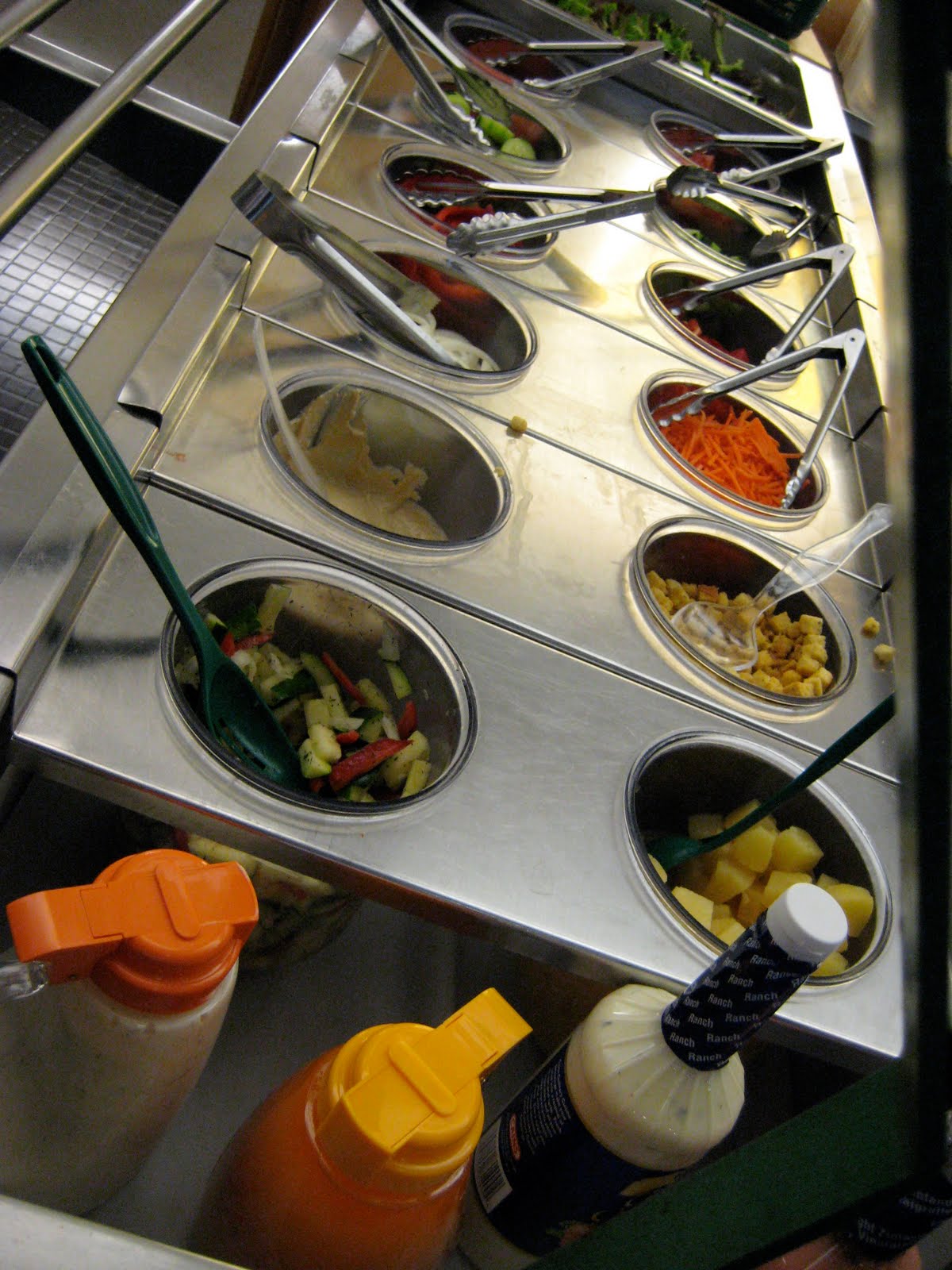
Behind The Kitchen Door Series: More About The Salad Bar


One of the very first things I did on the job was make a lentil salad for our salad bar.  It was really simple: I boiled 10 cups of lentils until they were tender and mixed them with vinegar, oil and salt and pepper.  No one had seen lentils on the salad bar before, so they were devoured quickly.  My next step was to show our salad lady how to make them.        

Our salad lady wears many hats during her day at my school.  She’s also a lunch server, dishwasher, and kitchen helper too.  She spends less than half of her six-hour day working on the salad bar.  While she usually makes all components of the salad bar, I will pitch in too.  Items like roasted vegetables involve a bit of coordination with other staff that might be using the oven that day.    

There has been resistance to the change, however gradual it has been.  Breaking a routine that has been set in place for a very long time takes getting used to.  Most improvements to the salad bar require more work and effort, and the workday hasn’t gotten any longer.  It’s a contentious issue, and I understand both sides.  For now, adding a couple of new dishes here and there has been working for us.     
   
Even with many improved dishes on the salad bar this year, the cost of ingredients has been about the same as before.  Our salad bar held fresh raw vegetables, and canned and processed food.  Because many of our newer dishes begin with dried ingredients, beans or grains, that we have to cook ourselves, we aren’t paying for the convenience of cooked food in cans, which tend to be pricier.  Also, by buying from a local farm, serving fresh, in-season vegetables becomes affordable – we pay $13 for ten pounds of peeled and diced butternut squash.  Prices of our staple salad vegetables fluctuate dramatically over the school year, so if the cost of cucumbers is particular high one week, we may reduce the amount, or even eliminate, what we put out on the bar.